Potatoes and green peas are such a gorgeous combination. Alu matar, also called aloo matar or matar aloo, is a classic Indian curry, especially popular in winter when fresh green peas are in season. Some people add soya chunks or other vegetables, but my mum keeps it simply potatoes and peas. That is how I love it too.
This version has a beautifully smooth onion, tomato and cashew sauce, scented with cinnamon and cardamom. It is a lovely vegetarian dish for a festive meal, but just as welcome for a weekend dinner. Serve it with freshly made puris and it really does feel special.
The secret is a little patience with the curry base. There is nothing complicated here, but giving the onions and tomatoes time to cook makes all the difference. The curry is gluten-free, and a few simple changes will keep it vegan as well.
This recipe was created in collaboration with Mutti tomatoes.
Why This Potato and Pea Curry Is Lovely for Entertaining
I often make this curry when family or friends are coming over. It is straightforward, you can make it ahead, and the quantities are easy to halve or increase. This batch comfortably feeds four to six people.
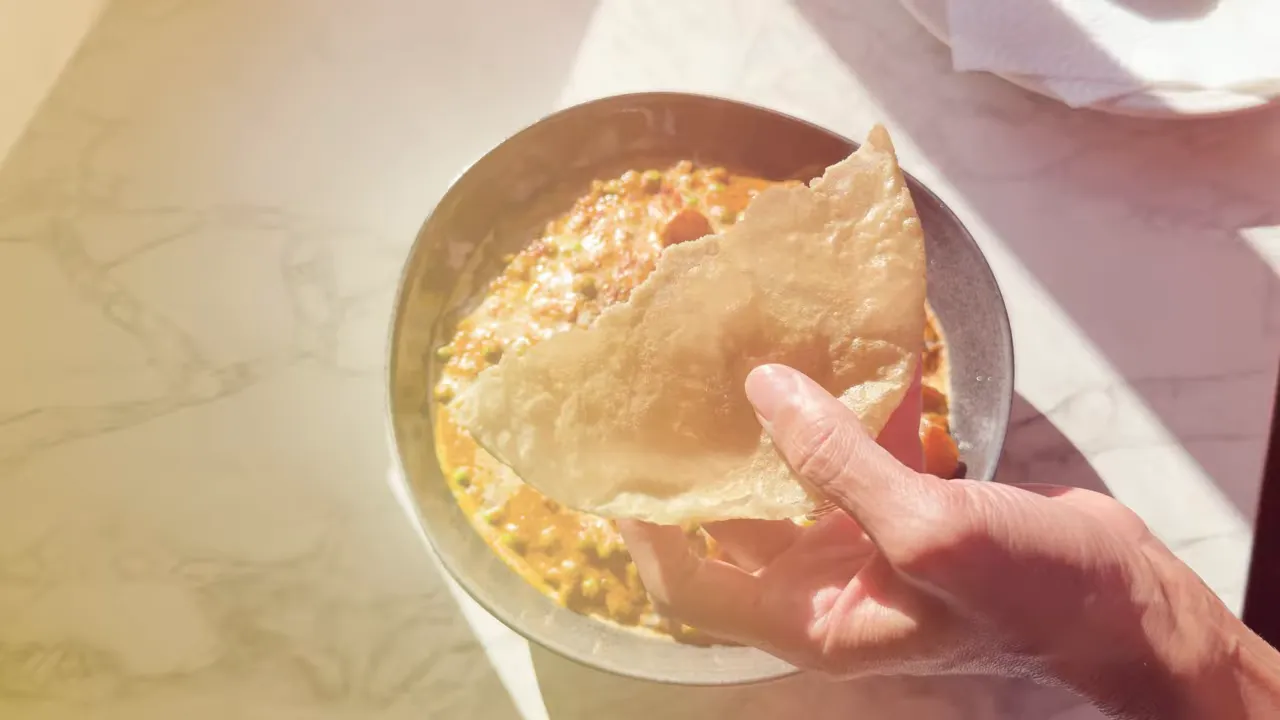
For Diwali, I particularly like serving it with puris, those lovely fried flatbreads that are perfect for scooping up the sauce. It is equally at home on a Christmas vegetarian table or as part of a generous weekend meal.
The cashews are blended into the base, giving the sauce body and a smooth texture. A little cream at the end makes it extra special, but the curry is still delicious without it.
Ingredients
Serves: 4 to 6
For the onion and tomato base
- 2 tablespoons oil
- 3 medium onions, peeled and roughly chopped
- 6 garlic cloves, peeled and roughly chopped
- A generous chunk of fresh ginger, peeled and roughly chopped
- 70 g cashew nuts
- 1 x 400 g tin finely chopped tomatoes, such as Mutti Polpa
- 2 tablespoons triple-concentrated tomato purée, optional
- A splash of water to rinse the tomato tin
- 100 to 200 ml water to help blend the sauce
For the curry
- 1 tablespoon ghee, or oil for a vegan curry
- 1 cinnamon stick
- 5 to 6 cardamom pods
- 100 ml water to rinse the blender
- 1 teaspoon salt
- 1 teaspoon turmeric
- 1 teaspoon chilli powder, plus a little extra to finish if you like
- 1½ teaspoons garam masala
- ½ teaspoon honey, or sugar for a vegan curry
- 700 g baby potatoes or regular potatoes, washed and cut into evenly sized pieces
- 100 ml boiling water for cooking the potatoes
- 300 g frozen peas
- 1 tablespoon kasuri methi, or dried fenugreek leaves, optional
- 4 tablespoons cream, optional
A note on the tomatoes: The tin of chopped tomatoes is essential to this sauce. The concentrated purée is optional, but I like adding it because I want a really pronounced tomato flavour and that gorgeous colour.
How to Make Alu Matar
1. Give the onions and cashews some colour
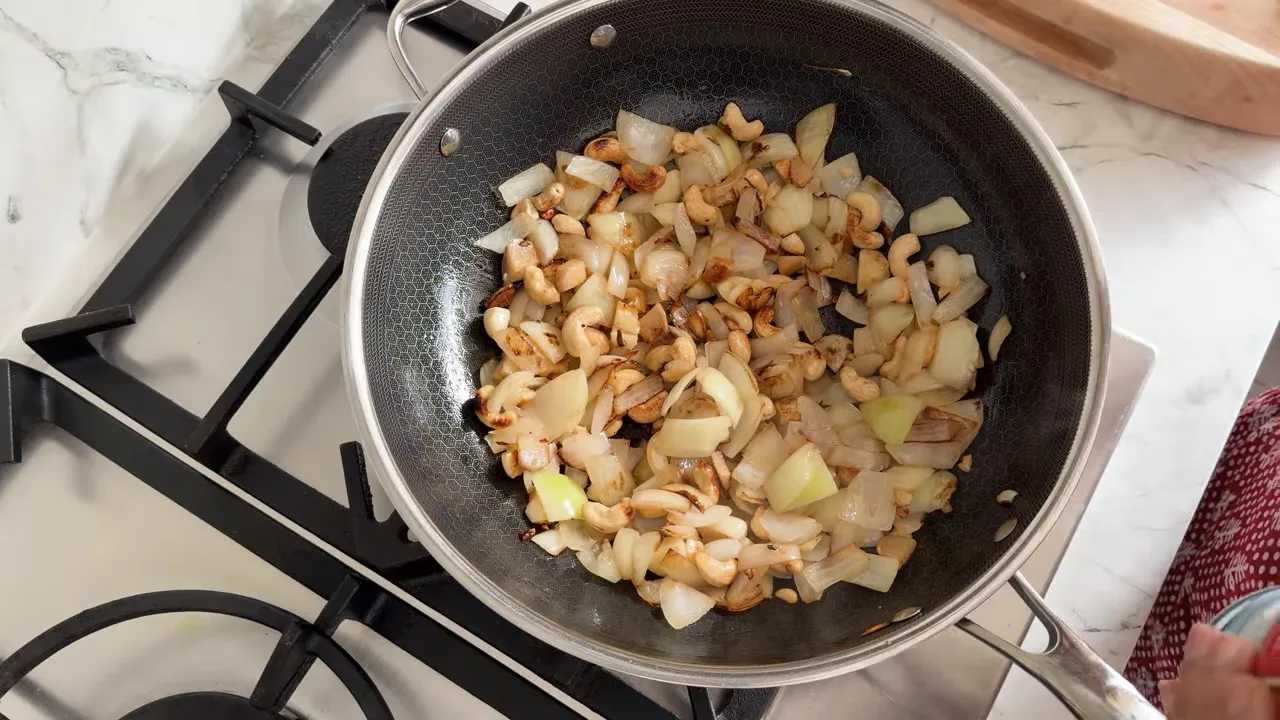
Heat the oil in a large pan. Once hot, add the onions, garlic, ginger and cashews.
Cook over a high heat for about 7 to 8 minutes, stirring regularly. You want some golden, lightly charred patches on the onions, garlic and cashews. This first stage is about getting a little colour and that lovely roasted flavour, rather than gently softening everything over a low heat.
While the onions cook, prepare the potatoes. I use baby potatoes and leave the skins on after giving them a good wash. Regular potatoes are absolutely fine too. The important thing is to cut them into similar-sized pieces so they cook evenly.
2. Add the tomatoes and cook gently
Add the chopped tomatoes. Rinse the tin with a small splash of water and pour that in too, so none of the tomato is wasted.
Stir in the tomato purée, if using. Mix everything well, cover and reduce the heat to medium-low.
Cook for 15 to 20 minutes, stirring halfway through. I let mine cook for the full 20 minutes. This is where that bit of patience comes in, so do not rush straight to the next step.
3. Cool slightly, then blend until smooth
Turn off the heat and let the mixture cool for about 5 to 10 minutes before blending. Do not blend it while it is piping hot, and follow your blender’s instructions for warm ingredients.
Transfer the mixture to a blender and add 100 to 200 ml water, enough to help it blend into a smooth sauce. You can use that water to rinse the cooking pan first and collect any remaining tomato mixture.
There is no need to wash the pan. The curry is going straight back into it.
4. Add the whole spices and cook the sauce again
Heat the ghee in the same pan. For a vegan version, use a tablespoon of oil instead.
Add the cinnamon stick and cardamom pods. Stir them briefly in the hot fat to release their flavour, then pour in the blended onion and tomato sauce.
Rinse the blender with another 100 ml water and add that to the pan. Give everything a good mix.
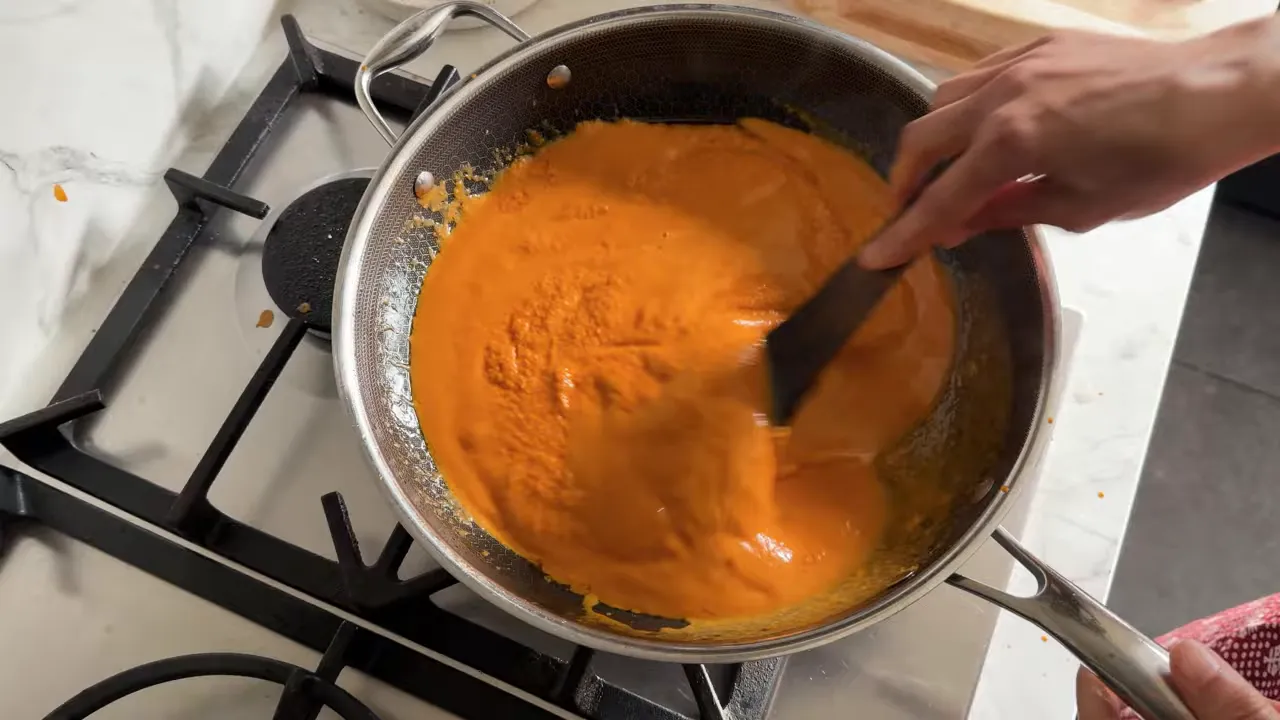
Cover and cook over medium-low heat for another 20 minutes, stirring after 10 minutes. Keep the heat gentle at this stage, not high. The sauce is thick and can spit, so take care when lifting the lid and stirring.
5. Season and cook the potatoes
Briefly turn off the heat if the sauce is spitting. Add the salt, turmeric, chilli powder, garam masala and honey, or sugar if you are keeping it vegan. Stir thoroughly.
Add the potatoes and 100 ml boiling water. Mix so the potatoes are coated in the sauce, then cover and cook over low to medium heat until tender.
Start checking after about 12 minutes, but allow longer depending on the potato variety and the size of your pieces. Mine took between 15 and 20 minutes. Test a piece rather than relying only on the clock.
6. Finish with peas, fenugreek and cream
Once the potatoes are cooked, stir in the frozen peas. They go in right at the end because they need much less cooking than the potatoes. Let them heat through fully in the sauce.
Add the kasuri methi and stir in the cream, if using. Finish with a little extra chilli powder if you like.
That is it: tender potatoes, sweet peas and a gorgeous, richly flavoured sauce. Absolutely delicious.
Easy Vegan Changes and Ingredient Notes
- To make it vegan: Use oil instead of ghee, sugar instead of honey, and leave out the cream. All three changes matter.
- No kasuri methi? Simply skip it. Dried fenugreek leaves have a very distinct flavour, so I would not try to replace them with another herb. The curry will still be lovely.
- Baby or regular potatoes: Either works. Keep the pieces evenly sized and check that they are tender before adding the peas.
- Scaling the recipe: You can easily halve the quantities for a smaller meal or increase them for a larger gathering.
- Gluten-free serving: The curry itself is gluten-free. Serve it with plain rice if you need the whole meal to be gluten-free, rather than wheat-based breads.
What to Serve with Alu Matar
Puris are my festive favourite with this curry. For this meal, I used leftover chapati dough made with chapati flour and pearl millet flour to make a couple of simple puris. It is such a lovely way to turn dinner into something a bit more special.
You do not have to fry bread, though. This potato and pea curry is also delicious with:
- Naan
- Plain white rice
- Chapatis
- Lachha paratha
Choose whichever suits your meal. The sauce is the sort you will want to scoop up right to the last bit.
Making It Ahead
One of the reasons I return to this dish for entertaining is that it can be cooked ahead and reheated when it is time to serve. That leaves you free to prepare the bread or the rest of the meal without also making a curry from scratch.
Cool and refrigerate leftovers promptly, then reheat thoroughly. For practical storage guidance, the USDA’s advice on leftovers recommends using refrigerated leftovers within three to four days.
Whether you keep it vegan, finish it with cream, serve it with rice or make a few puris, this is a really special curry from a very simple combination. Give the base the time it needs, and those potatoes and peas will be full of lovely flavour.


