Roasted sweet potato, crunchy onions, fresh coriander and a proper little kick of chilli, all tucked between two thin layers of dough. This is such a lovely stuffed paratha, whether you want a simple lunch or something special for a festive table.
I have to be honest: I am not the biggest fan of sweet potatoes in a sabzi. But roast them, and I love them. They become beautifully soft and delicious, just right for mixing with earthy cumin and a gently sour touch of amchur.
There is no complicated stuffing technique here. You roll two circles of dough, spread the filling over one, cover it with the other and press. Cook with ghee for extra deliciousness, or use oil to keep the whole recipe vegan.
Makes: 8 small parathas, serving 4 people with 2 each.
Ingredients
For the dough
- 300 g chapati flour, also called atta, plus a little extra for rolling
- ½ teaspoon salt
- ½ teaspoon chilli powder
- Approximately 200 ml water, added gradually
For the roasted sweet potato filling
- 2 sweet potatoes
- A little oil, for spraying or lightly coating
- 2 onions, finely chopped
- A little fresh coriander, finely chopped
- 1 red chilli, finely chopped
- ½ teaspoon salt
- ½ teaspoon chilli powder
- 1 teaspoon ground cumin
- 1 teaspoon amchur, also called dried mango powder
For cooking and serving
- Ghee or oil, as needed for cooking
- Pickle, chutney or a curry, to serve if you like
1. Roast the sweet potatoes
Heat the oven to 180°C fan or 200°C conventional.
Put the sweet potatoes on a baking tray and prick them a few times with a knife. Spray or lightly coat with a little oil, then place in the hot oven.
Start checking after 45 to 50 minutes. You want them lovely and soft all the way through. Mine needed 55 minutes in total, so give them a little longer if necessary.
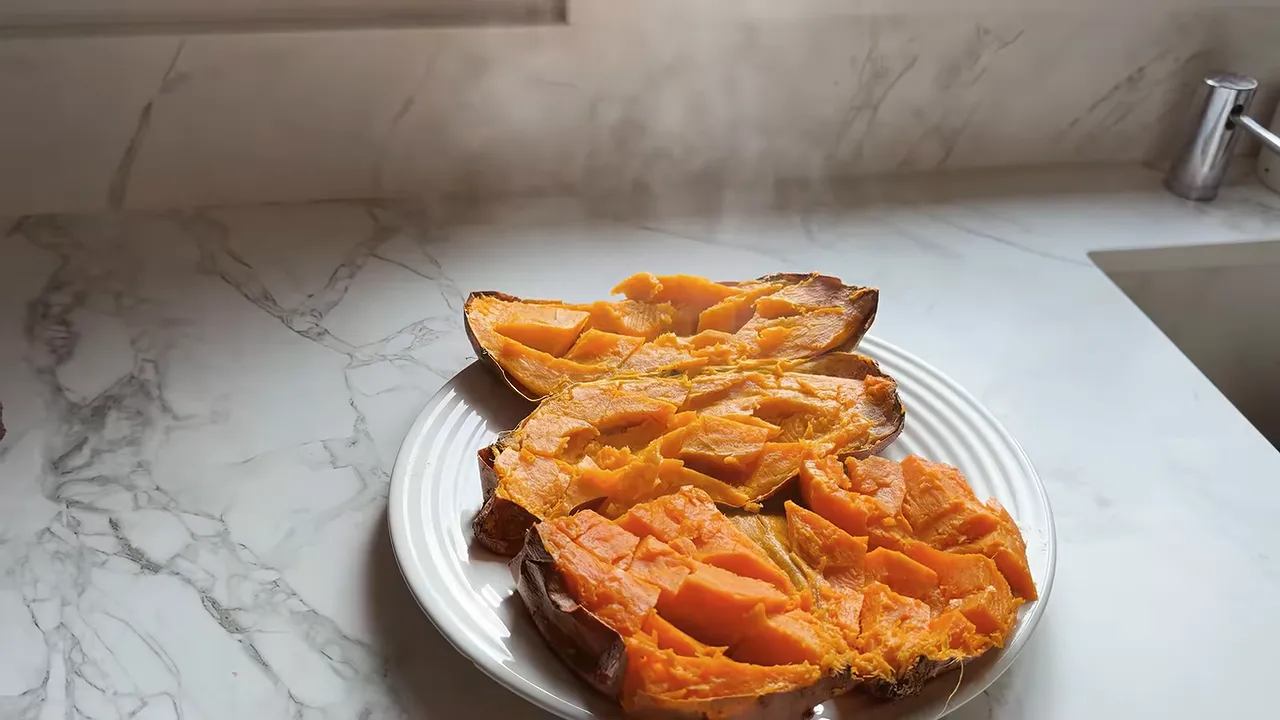
Once cooked, split them open lengthways and leave to cool. To help the steam escape more quickly, open out the halves and gently cut into the flesh, then spread them out on a plate.
2. Make the dough while the potatoes roast
Chapati flour, or atta, is wheat flour milled specifically for breads such as chapatis. I once visited a flour factory and saw how differently it was milled. If you cannot find it, plain flour is absolutely fine for this recipe. Use the same 300 g quantity.
Put the flour in a bowl with the salt and chilli powder. The dough only needs a little seasoning because there is so much flavour in the filling.
Add the water a little at a time, mixing with your hand until everything comes together into a soft dough. You may need around 200 ml, but please do not pour it all in at once. Stop when the dough feels soft; you might not need every drop.
Knead briefly to bring it together. This does not need lots of kneading, but it does need to rest. Cover the bowl with a lid and leave for about 45 minutes to an hour while the potatoes roast and cool.
3. Mix the sweet potato filling
While the potatoes cool, finely chop the onions, coriander and fresh chilli. Use whatever onions you have at home: red, white, pink or shallots are all fine. Parsley can replace the coriander, and a green chilli can replace the red one.
Scoop the cooled sweet potato flesh out of its skins into a large bowl and mash it. Add the chopped onions, herbs and chilli, followed by the salt, chilli powder, ground cumin and amchur. Mix everything together thoroughly.
The onions bring crunch, the cumin adds earthiness, and the amchur gives a gentle sour kick. You can find amchur in Indian shops and Asian supermarkets. If you cannot get it, use a little lemon juice instead.
Do keep a little heat in this filling. Sweet potato really benefits from that contrast, although you can choose your fresh chilli according to how hot you like your food.
Make sure the filling is completely cool before assembling the parathas.
4. Fill the parathas using two thin circles
- Divide the rested dough into 8 equal portions for 8 small parathas.
- Split each portion into 2 smaller pieces and shape them into balls.
- Dust lightly with flour and roll each piece into a fairly thin circle. You need 2 circles of roughly the same size for each paratha.
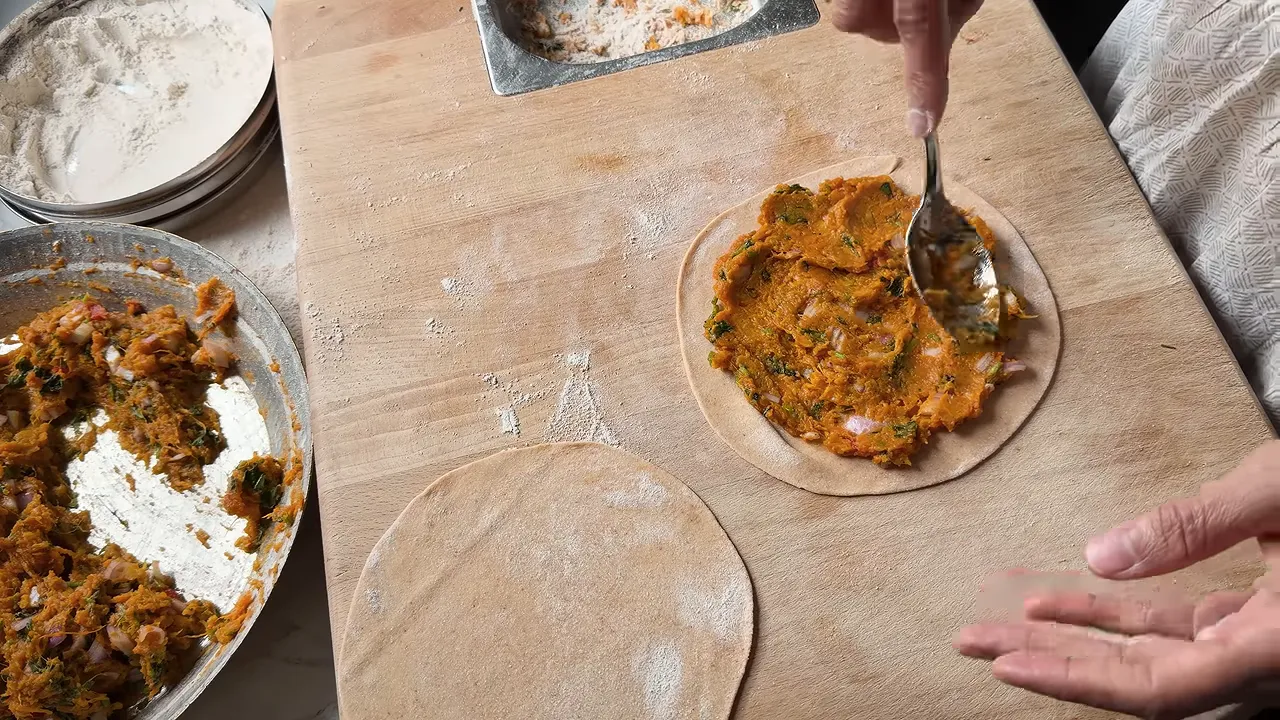
- Spoon some filling onto one circle and spread it evenly, taking it almost to the edges so every bite has a lovely amount of filling.
- Lay the second dough circle over the top.
- Gently press with your hands to push out trapped air and join the layers, including around the edges. There is no need to roll it again.
You can make larger parathas if you prefer. Simply use larger portions of dough for the two layers and adjust the amount of filling to suit.
5. Cook with ghee or oil
Heat a frying pan or tawa and carefully place a filled paratha in the dry pan. Let it start cooking, then turn it over as the surface changes colour and brown spots begin to appear.
Add a little ghee and spread it over the surface. Turn the paratha, add a little more as needed, and continue cooking both sides, pressing gently with a spatula to help it cook evenly.
You are looking for cooked dough and a golden surface with deep brown patches on both sides. Repeat with the remaining dough and filling.
For a special paratha like this, I do love ghee. It adds such lovely flavour. But oil works perfectly well if you want to keep it vegan.

How to serve sweet potato paratha
This is a complete meal in itself, so you can keep lunch very simple and serve the parathas on their own, or with a little pickle or chutney on the side.
They are also lovely alongside a curry and make a wonderful addition to a festive spread for Diwali, Thanksgiving, Christmas or New Year. The filling has sweetness, freshness, spice and that little sour note, all wrapped in beautifully browned bread.
Roasting sweet potatoes and putting them into a paratha really does work beautifully. Serve them hot and enjoy.


