Soft homemade chapatis are really straightforward to make, and you need very little: chapati flour, water and a little oil. The important things are getting the dough consistency right, giving it a short rest and cooking it on a properly heated pan.
These Indian flatbreads, also known as roti or phulka, are lovely with all sorts of curries, used as wraps, or simply eaten warm with butter and pickle. Once you get into the rhythm of making them, those shop-bought wraps become much less tempting!
What You’ll Need
- Chapati flour: For the dough, plus a little extra for dusting and adjusting the consistency.
- Water: Added gradually, as different brands of flour absorb different amounts.
- Oil: A teaspoon to mix into the flour, plus a tiny amount for smoothing the dough.
- Butter, ghee or oil: For spreading over the cooked chapatis to help keep them soft. I prefer butter.
You’ll also need a mixing bowl, a jug, a rolling pin, a rolling board or clean work surface, a skillet or flat pan, tongs and a clean tea towel.
This is a dough to judge by feel rather than a fixed water measurement. Start with the amount of chapati flour you want to use for your batch, then add water slowly until the dough comes together.
1. Make a Soft, Pliable Dough
If your chapatis tend to turn brittle, hard or crispy, try mixing a teaspoon of oil into the flour before adding the water. It is a simple little adjustment that helps with softness.
Pour in a little water at a time, mixing with your hand and bringing the flour together. Don’t empty the jug into the bowl all at once. Each flour behaves slightly differently, so give yourself the chance to adjust as you go.
If the mixture becomes too wet, add a little more flour. Work it together until you have a dough that is neither wet nor hard, but soft and easy to handle.
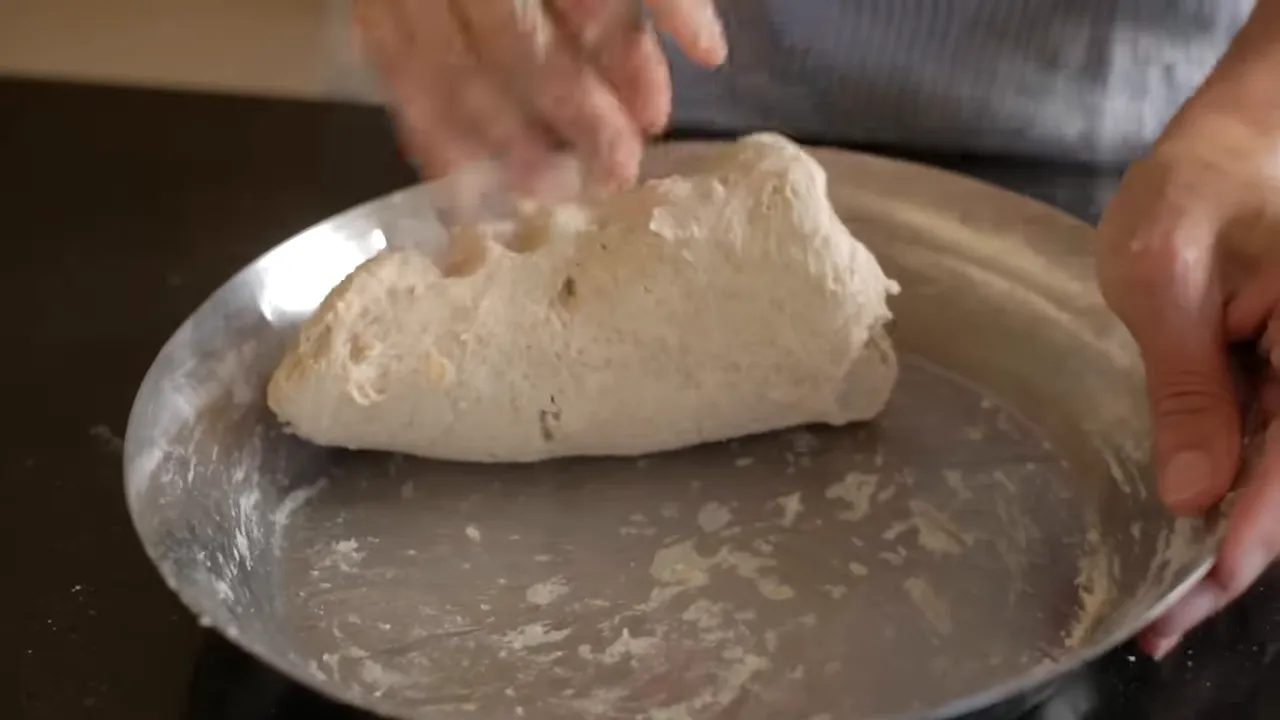
Rub a tiny amount of oil onto your palms and smooth the dough into a ball. Leave it to rest for 10 to 15 minutes before rolling.
If you are making the dough ahead, you can keep it covered in the fridge for two to three days.
2. Shape and Roll the Chapatis
Take a small portion of dough and roll it between your palms to make a ball. Keep a small bowl or box of dry flour nearby, then coat the dough lightly in flour so it doesn’t stick as you roll.
Roll it into a thin, round chapati. I use a rolling motion that lets the dough turn as I work, but use whichever technique feels comfortable. The aim is an evenly rolled flatbread, rather than a perfect circle at any cost.
3. Cook on a Hot Skillet
Heat the skillet before adding the chapati. It needs to be nice and hot, not still warming up when the dough goes on.
- Cook the first side briefly. Place the rolled chapati onto the hot skillet. After a few seconds, small bubbles will begin to appear.
- Make the first turn. Flip it when those bubbles appear. The first side will not be fully cooked yet, and that is exactly right.
- Cook the second side. Give it a few more seconds, checking underneath with tongs so your fingers stay away from the hot pan.
- Turn it a second time. Once the second side has cooked, flip the chapati again and encourage it to puff.
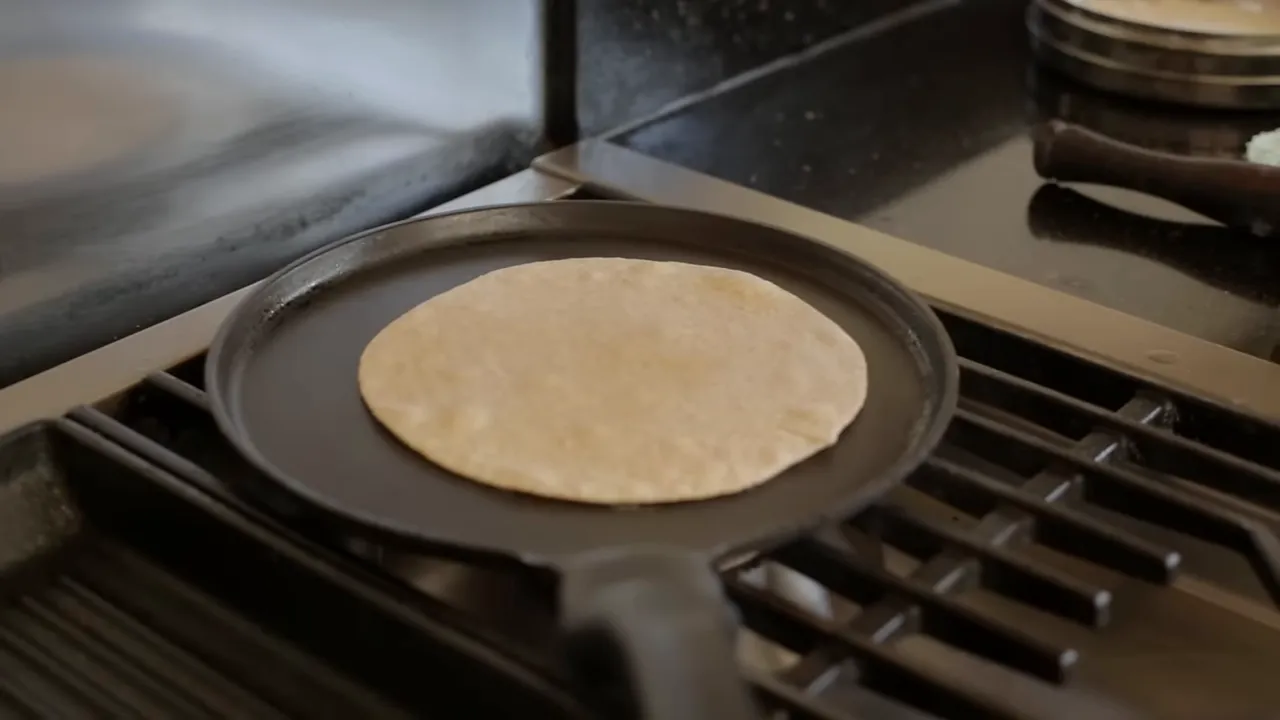
Press the Edges, Not the Centre
After the second turn, use a folded, clean tea towel to press gently around the sides of the chapati. Press at the edges rather than in the centre. You should see it begin to puff up as you work around it.
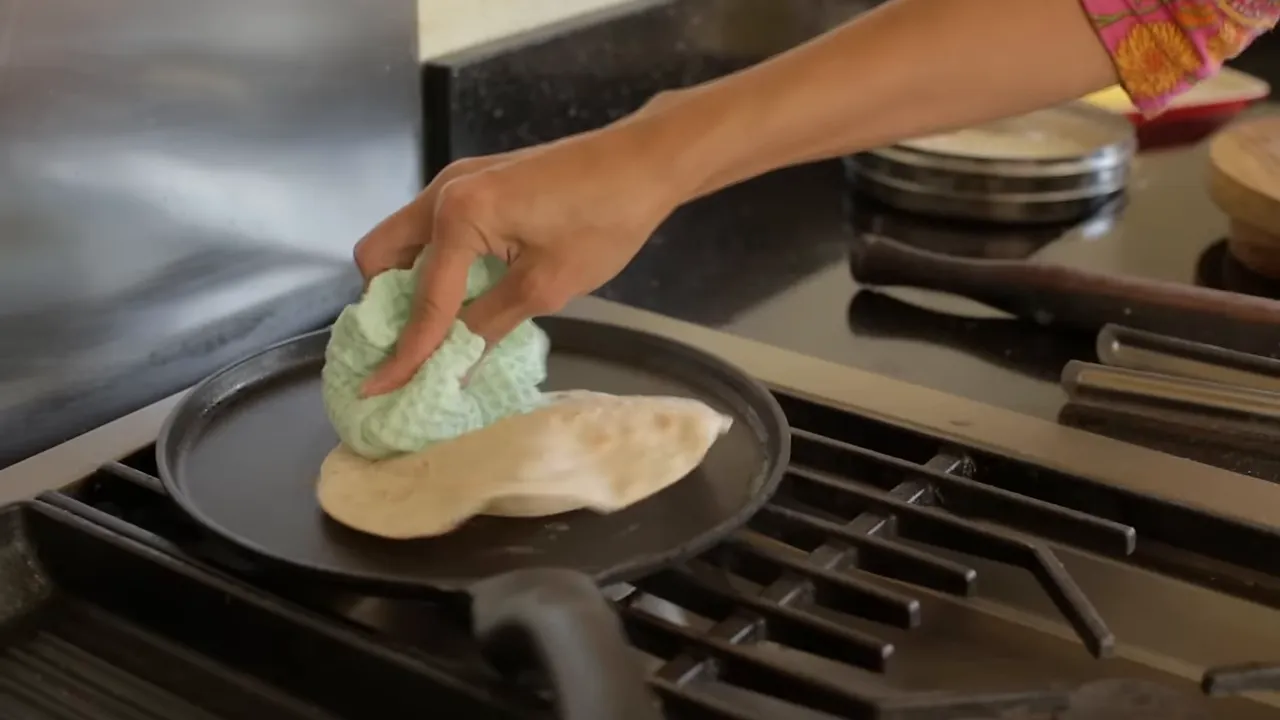
Keep the cloth and your hands clear of the flame and hot pan. Tongs are useful for turning and lifting the chapati safely.
4. Finish, Store and Serve
Transfer the cooked chapati to a plate and spread with a little butter while it is warm. You can use ghee or oil instead, but butter is my favourite. This finishing touch helps keep the chapatis lovely and soft.
Wrap the chapatis in foil to keep them covered. For keeping over the next couple of days, let them cool and refrigerate them, then reheat in the microwave or on a pan.
Serve with your favourite curry, fill them as wraps, or keep things beautifully simple with warm chapati, butter and pickle. With practice, the rolling and cooking become really quick, and a fresh batch is such a lovely thing to bring to the table.


