A basket full of fresh greens, beans, gourds and spring onions is a very exciting start to lunch. Add a chef sharing his grandmother’s cooking, coconut sizzling with spices, and eight quite different vegetable dishes, and it becomes something rather special.
During my stay at Cape Weligama, on Sri Lanka’s southern coast, I joined the chefs for a trip to the local food market before heading back to the kitchen. I thought we would cook a few things. Chef had a much bigger meal in mind!
What I loved most was how clearly you could taste each vegetable. The beans and okra kept their crunch, the cucumber still tasted of cucumber, and the bitter gourd curry was absolutely fantastic. There was plenty of spice and coconut, but neither took over everything.
Key Takeaways
- Sri Lankan vegetable dishes can combine quick tempering, coconut-based simmering and cooking without added oil.
- Grated coconut and coconut milk bring different textures to beans, greens and vegetable curries.
- Goraka adds sourness, while mustard gives cucumber curry flavour without overwhelming the vegetable.
- Preparing vegetables and spices first helps several distinct dishes come together efficiently.
A Sri Lankan Breakfast Before the Market
The morning began with black tea and rice cooked in coconut milk, served with chicken curry, onion chutney and chilli. With the lovely surroundings at Cape Weligama, it was a very good way to begin the day.
It was also the first morning of this visit without rain, so I was particularly pleased to be heading out. Our plan was simple: buy vegetables, stop for fresh seafood, and bring everything back for a cooking session.
Exploring Weligama’s Local Food Market
I went shopping with Chef Upali, who introduced me to the produce as we worked our way around the stalls. There were so many beautiful greens. Some ingredients were familiar, while others had me asking for the name more than once. Remembering all those names was another matter!
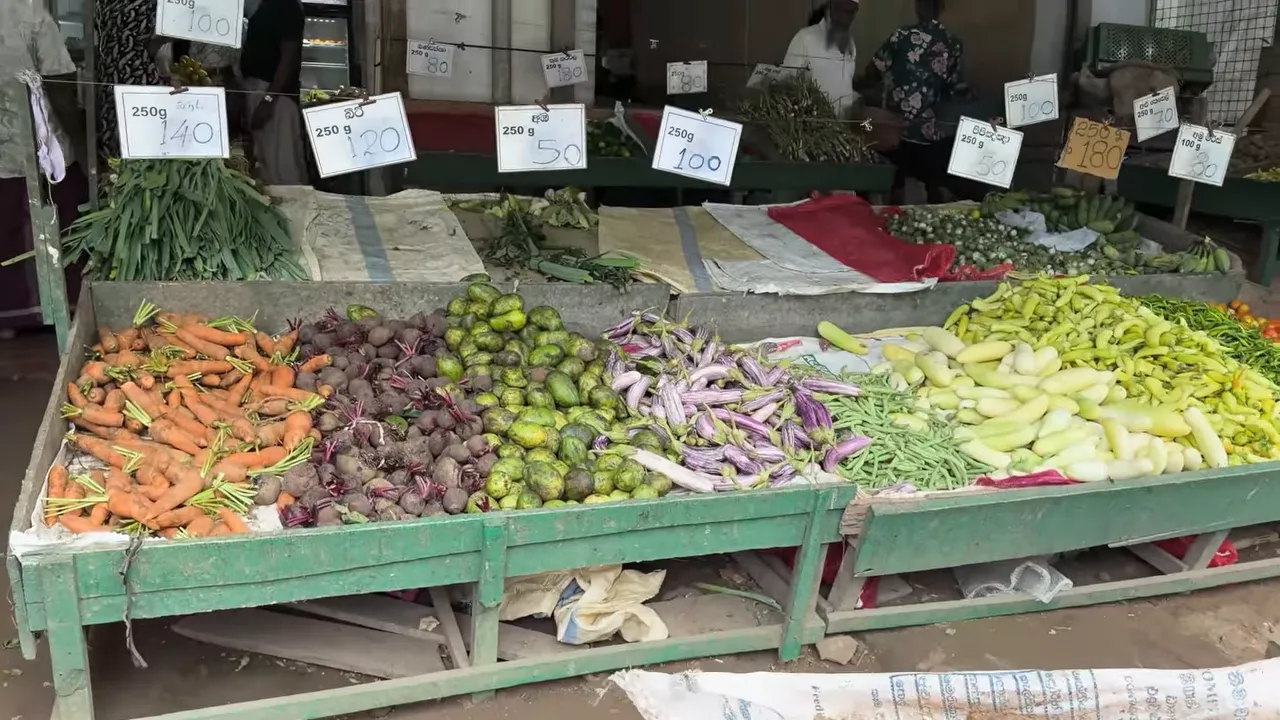
Greens, local beans and plenty of gourds
One of the first greens we looked at was kangkung. Beside it were local beans with frilled edges, which Chef explained would be cut into small pieces for cooking, rather than used whole.
As we moved around the market, we also found:
- Local mushrooms, described as village mushrooms.
- Small local chillies, with a very clear warning about their heat.
- Okra, which I also know as bhindi.
- Elabatu, another local vegetable Chef pointed out.
- Spring onions, with lovely little purple bulbs and long green tops.
- Malu miris, the pale capsicum peppers.
- Ridge gourd and bitter gourd, both destined for the kitchen.
The spring onions were particularly tempting. All I could think about was making fried rice with them. They looked so fresh and lovely.
At the fruit stall, Chef explained that the banana varieties differed in flavour, with one a little sourer and another sweeter. We had a banana to eat as we shopped, which was a lovely little pause between choosing vegetables and getting everything weighed and packed separately.
A stop at the fish market
With our vegetables bought, we headed to the fish stalls by the seafront. The catch comes in fresh each day, and Chef showed me tuna and white snapper among the fish on display, along with the shellfish.
We chose four kinds of seafood for the meal. Back in the kitchen, the selection included white snapper, prawns, squid and large shellfish introduced as langoustines. The fishmongers cleaned the fish, prawns and squid before we returned to the hotel.
The seafood cooking was saved for the next part of the meal. First, there was a wonderful collection of vegetables to work through.
The Building Blocks of Our Sri Lankan Cooking Session
By the time I joined Chef in the kitchen, all the vegetables had been chopped and arranged in bowls. There was butternut squash, cucumber, okra, ridge gourd, bitter gourd, beans and greens, with the seafood prepared alongside them.
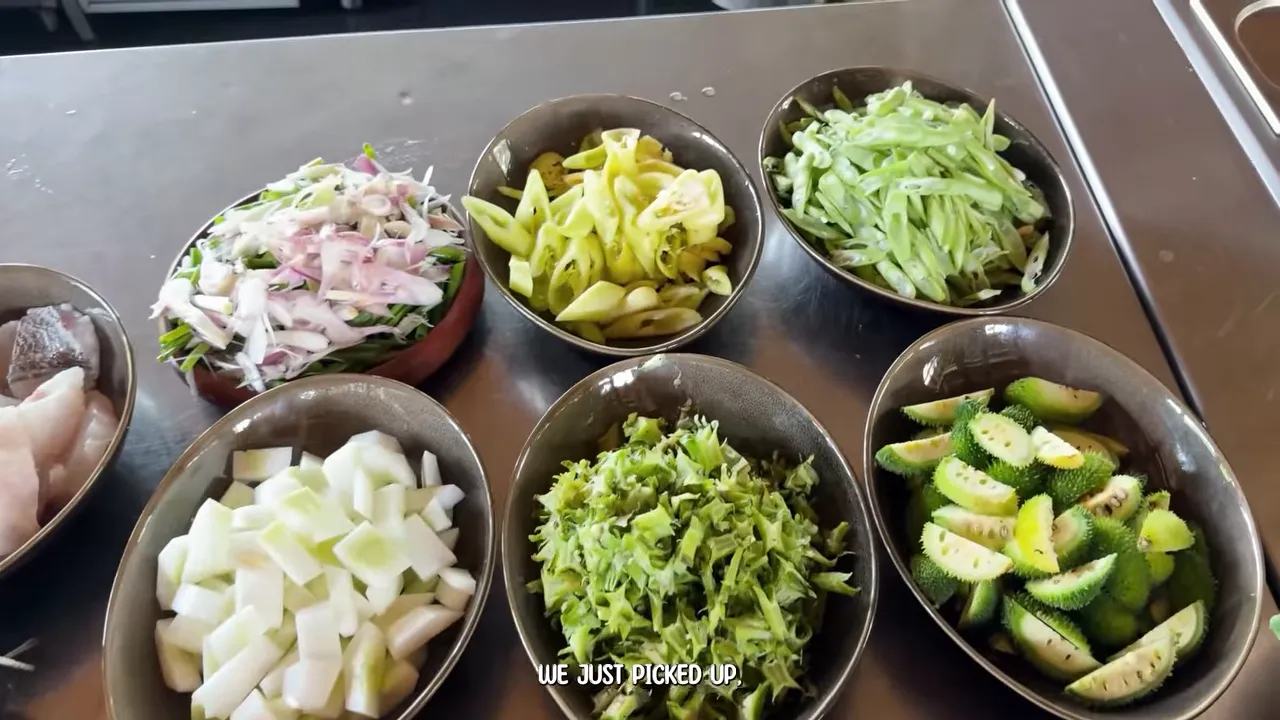
Chef lives in Kandy, which I had not been able to visit on this trip. It was lovely to learn something of his family cooking instead, beginning with a dish inspired by his grandmother.
A few ingredients appeared repeatedly, but in different combinations:
- Coconut oil for starting many of the dishes.
- Curry leaves, garlic, ginger and onions for the aromatic base.
- Mustard seeds, fenugreek, cinnamon, cardamom and cloves used according to the dish.
- Turmeric, curry powder and chilli powder for colour, flavour and adjustable heat.
- Fresh grated coconut and coconut milk, each bringing something different to the pan.
- Goraka and mustard paste for distinctive sourness and mustard flavour.
Chef checked how much chilli I wanted, and we settled on medium heat. He also explained that his Jaffna-style curry powder was different from the other Sri Lankan curry powder in the spice tray. For the Jaffna blend, he described pan-roasting coriander seeds, cardamom, cinnamon, cloves and curry leaves.
These are cooking notes rather than measured recipes. Chef cooked by eye, adding small amounts, tasting and adjusting as he went. The useful thing to take home is the order of cooking, the combinations of ingredients, and the textures he was aiming for.
1. Grandma-Style Finely Chopped Green Beans
The first dish was wonderfully quick: finely chopped green beans cooked with aromatics, turmeric and coconut. Chef called it his grandmother’s style of tempered beans.
- Start with coconut oil and add curry leaves, sliced onion and a little chopped garlic.
- Stir in turmeric, which Chef called kaha.
- Add the finely chopped beans and stir-fry, tossing them through the aromatic mixture.
- Mix in freshly grated coconut.
- Season with salt and pepper, then taste.
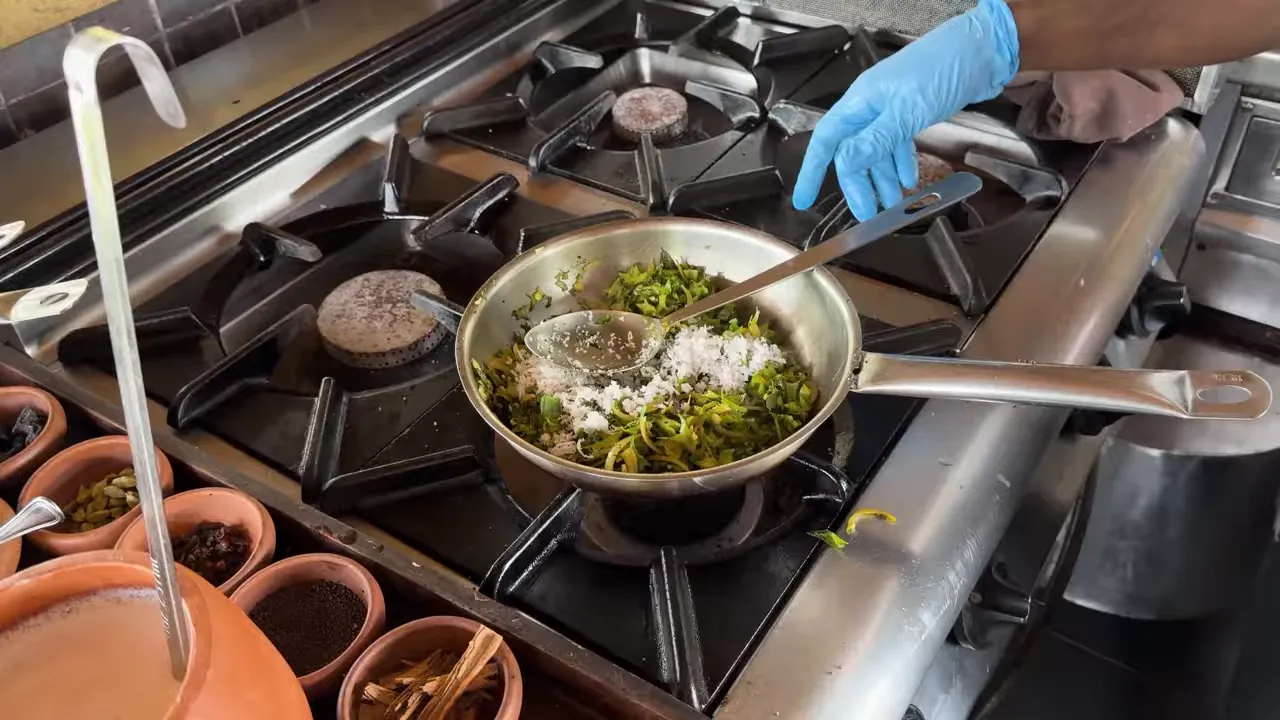
The smell was just lovely. What surprised me was how quickly it came together, and the beans still had crunch. It was much closer to a quick stir-fry than a dish sitting in lots of sauce.
Simple ingredients, very little fuss, and so much flavour. A very good start.
2. Jaffna-Style Pumpkin Curry
Next came a Jaffna-style pumpkin curry, made with the orange butternut squash we had ready on the counter.
Chef began with coconut oil and an aromatic mixture, then added his Jaffna-style curry powder. Smelling that spice blend on its own was a treat. The roasted spices gave it such a lovely fragrance.
The squash went into the pan and was tossed until coated. He then added grated coconut, followed by coconut milk, before moving the curry aside to continue cooking under a lid.
This was a useful contrast with the first dish. The beans were finely chopped and quickly cooked, while the squash was cut into chunks and given time in its spiced coconut sauce.
When I tasted the pumpkin curry later, it was beautiful. There was already so much happening on the stove, but this was definitely worth stopping for.
3. Sour Bitter Gourd Curry with Goraka
The bitter gourd curry brought a completely different flavour. Chef explained that ambul means sour, and introduced me to goraka, also called gamboge, as the souring ingredient.
He used only a little oil for this dish, then built up the flavour with cardamom, goraka, cinnamon, fenugreek and cloves. Onion and tomato followed, then the bitter gourd and further aromatics.
Sri Lankan curry powder, turmeric and a medium chilli powder seasoned the vegetables. Mustard paste went in too, followed by water, and the curry was left to simmer for about ten minutes. Coconut milk was added towards the end.
I was curious enough about the mustard paste to smell it separately. It is one thing knowing that mustard is in a curry, and another getting familiar with the ingredient before it goes into the pan.
The finished bitter gourd curry was a real highlight. The sourness, spices and coconut worked so well together. Honestly, it was unreal.
4. Tempered Okra with Mustard Seeds and Cinnamon
The okra began with mustard seeds in oil, followed by local cinnamon, onion, ginger and garlic. Chef added powdered spices, including a little chilli powder, before tipping in the sliced okra.
He tossed everything together, seasoned with salt, and added chopped tomatoes as it cooked. A little liquid helped finish the dish without turning it into a large pan of gravy.
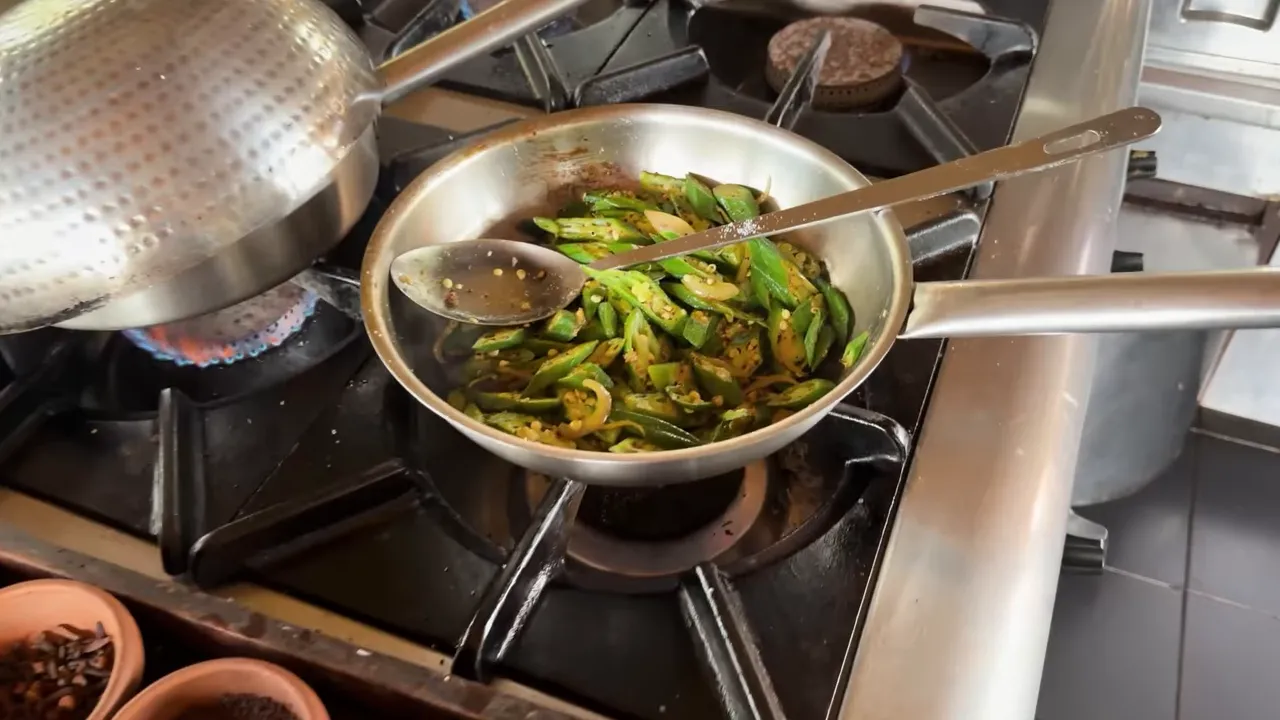
The texture was the lovely part: the okra still had bite. It was cooked and coated in flavour, but not soft and collapsed. I tasted a little straight from the pan and immediately wanted more.
This was another reminder that the vegetable itself mattered just as much as the spice mixture around it.
5. Mustard Cucumber Curry
I was particularly interested in the mustard cucumber curry. Cucumber was not simply a fresh accompaniment here. It became the centre of a warm, gently cooked dish.
Chef started with coconut oil, mustard seeds and fenugreek, then added garlic, ginger, cinnamon and curry leaves. Tomato and chunks of local cucumber followed.
After tossing the cucumber with the seasonings and mustard paste, he added grated coconut, salt and water, followed by coconut milk. The pan was covered and left to cook for about ten minutes.
When I tasted it, the mustard was delicious, but it had not overwhelmed the cucumber. You could still tell exactly which vegetable you were eating. That balance was so good.
6. A Second Tempered Bean Dish
There were two different bean preparations in this meal. The first used very finely chopped beans and grated coconut. For the second, Chef used longer, thinly sliced pieces of the local beans.
He began with coconut oil, mustard seeds and cinnamon, then added onion, garlic and curry leaves. The sliced beans went in next, followed by a little seasoning and chilli.
He kept the heat gentle enough for the beans not to become fiercely spicy, adding liquid in small amounts as they cooked.
I initially called this a bean curry, and Chef corrected me: tempered beans. It was a helpful distinction. Not every vegetable dish in this spread was a saucy curry.
Again, they were crunchy, fresh-tasting and delicious. Chef told me beans were a favourite of his. I could quite understand why.
7. Ridge Gourd Curry Without Added Oil
The ridge gourd used a different method altogether. Instead of frying an aromatic base first, Chef combined the ingredients in the pan before cooking.
- Put the sliced ridge gourd into a pan.
- Add curry leaves, garlic, onion, ginger, chilli and tomato.
- Add a little cinnamon, curry powder, turmeric, pepper and salt.
- Mix everything thoroughly by hand.
- Add coconut milk, bring to the heat, then cover and cook for about ten minutes.
Chef explained that he had learnt this way of mixing from his mother. There was no added oil in this curry, unlike the dishes that began with a hot pan and coconut oil.
By the end, it had become a lovely pale coconut curry, with the ridge gourd cooked through in the sauce. Such a straightforward method, and another completely different result from the same collection of kitchen ingredients.
8. Kangkung and Spring Onion Greens with Coconut
For the final vegetable dish, we returned to the greens we had bought that morning.
Chef started onion and garlic in coconut oil, then added a generous bowl of kangkung. As the leaves wilted, he tossed them through the pan and added the chopped spring onions.
A little spice and seasoning followed, then freshly grated coconut. He mixed it all together so the coconut ran through the leaves and stems.
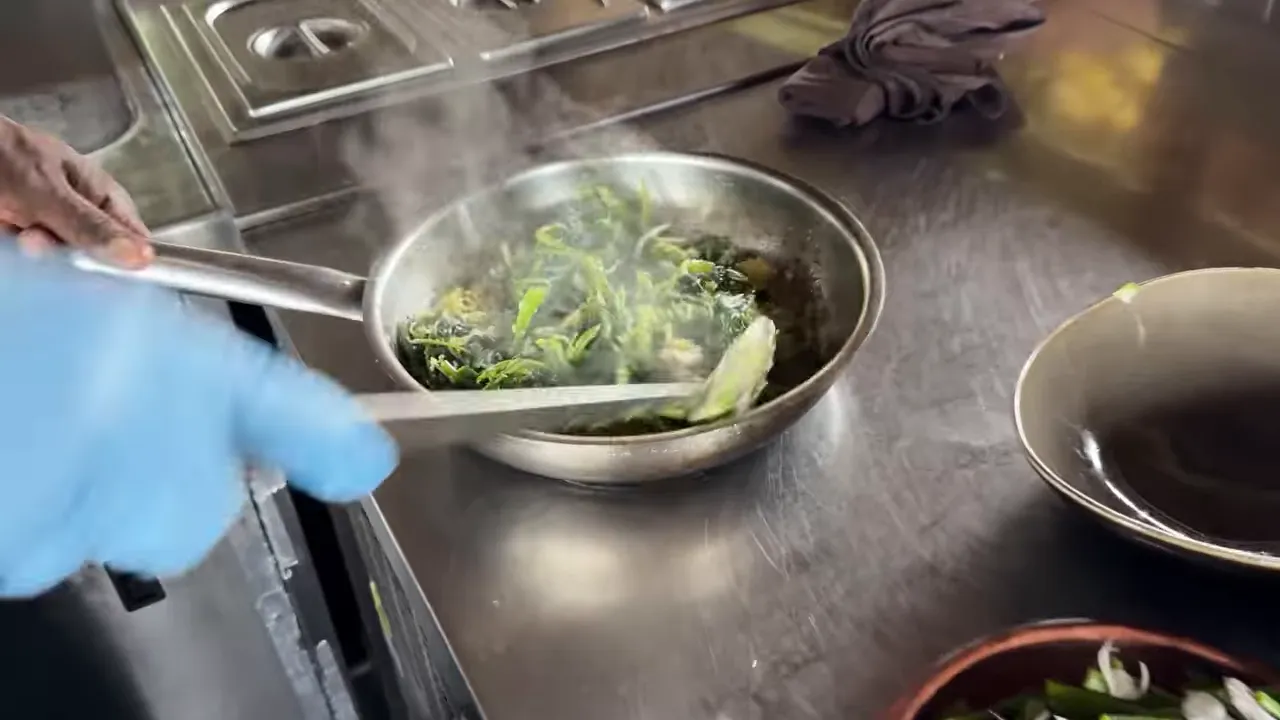
It was lovely to see that big bowl of market greens become a finished dish so quickly. The coconut gave it a different texture from the creamy curries, and the spring onions I had been admiring earlier finally had their moment.
Eight Vegetable Dishes, Each with Its Own Character
By the time Chef finished, we had eight vegetarian dishes ready, with all the seafood still to cook. He had been planning around thirteen or fourteen dishes for the complete meal. No wonder the counter was filling up!
What stayed with me was not simply the number of dishes, but how different they were:
- Finely chopped beans with coconut, alongside longer sliced tempered beans.
- A fragrant Jaffna-style squash curry.
- Sour bitter gourd with goraka and mustard.
- Okra that kept its crunch.
- Cucumber gently cooked with mustard.
- Ridge gourd simmered in coconut milk without added oil.
- Leafy greens tossed with spring onions and grated coconut.
The preparation mattered too. All the chopping was done before cooking began, and the spices were ready in small bowls beside the stove. That allowed Chef to move from one pan to the next, leaving the curries to simmer while he quickly tempered another vegetable.
My biggest lesson from this Sri Lankan cooking session was to pay attention to the vegetables, not just the spices. Keep some crunch where it belongs. Let cucumber taste of cucumber. Use coconut in different forms, and vary the method rather than giving every vegetable the same treatment.
Everything I tasted was lovely. Fresh produce from the market, thoughtful seasoning, family methods and straightforward cooking made a wonderful spread before we had even started on the fish.


